Laws and Strategies that guide this plan
The Inclusive Communities Plan is shaped by laws and strategies that protect the rights of people with disability and guide how councils like ours must act. The table below explains what each key framework means and how it influences this plan.
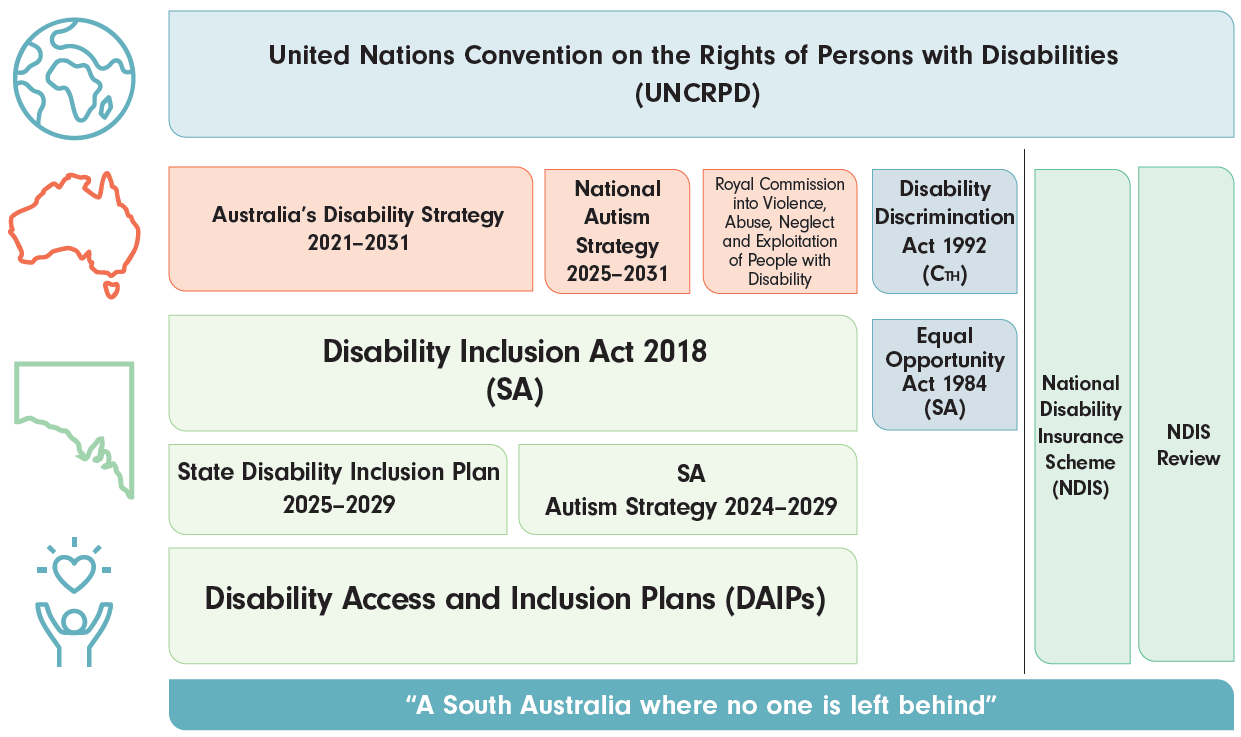
| Law or Strategy | What Is It About? | What Does It Mean for this Plan? |
| UN Convention on the Rights of Persons with Disabilities | An international human rights agreement recognising the rights of people with disability | This plan is grounded in the principle that inclusion, dignity, and participation are human rights |
| Australia’s Disability Strategy 2021–2031 | A national framework agreed by all governments to improve outcomes for people with disability | This plan supports national priorities such as accessibility, inclusion and economic participation |
| National Autism Strategy 2025–2031 | A national strategy to improve outcomes and quality of life for autistic people across their lifespan, focusing on inclusion, understanding and support in everyday settings | This plan supports creating environments, services and information that work for autistic people, including sensory-friendly spaces, clear communication and inclusive community participation |
| Disability Discrimination Act 1992 (CTH) | A national law that makes discrimination based on disability unlawful | This plan ensures that our services, facilities and decisions do not exclude or disadvantage people with disability |
| Disability Inclusion Act 2018 (SA) | South Australia’s state law on disability matters, requiring councils and other public authorities to plan for inclusion and remove barriers | This plan shows how people with disability can access our services, spaces and programs |
| State Disability Inclusion Plan 2025–2029 | A plan that sets the South Australian Government’s priorities for improving inclusion across the state | This plan shows how our priorities and actions align with the State’s focus areas and how progress is reported each year |